
Efficient Turnkey Systems for the Production of Roofing Membranes

Want to find out more about this offering?

Get in touch

Complete Coperion solutions – from raw material processing to high-performance production lines, based on comprehensive extrusion and process expertise

Coperion realizes turnkey systems for the production of roofing membranes. Coperion systems operate efficiently, intelligently, and reliably. They are based on our many years of experience with direct extrusion systems and our comprehensive expertise in material handling, feeding, and extrusion. 

Roofing membranes are plastic sheets made of flexible polymers. They serve as a protective waterproofing layer for large-scale flat roof systems on industrial, commercial, and logistics buildings, such as the roofs of production halls, warehouses, hospitals, schools, or large retail stores.

Roofing membranes consist of various plastic layers combined with nonwoven fabrics or woven fabrics. Typical materials used in plastic roofing membranes are PVC and TPO.

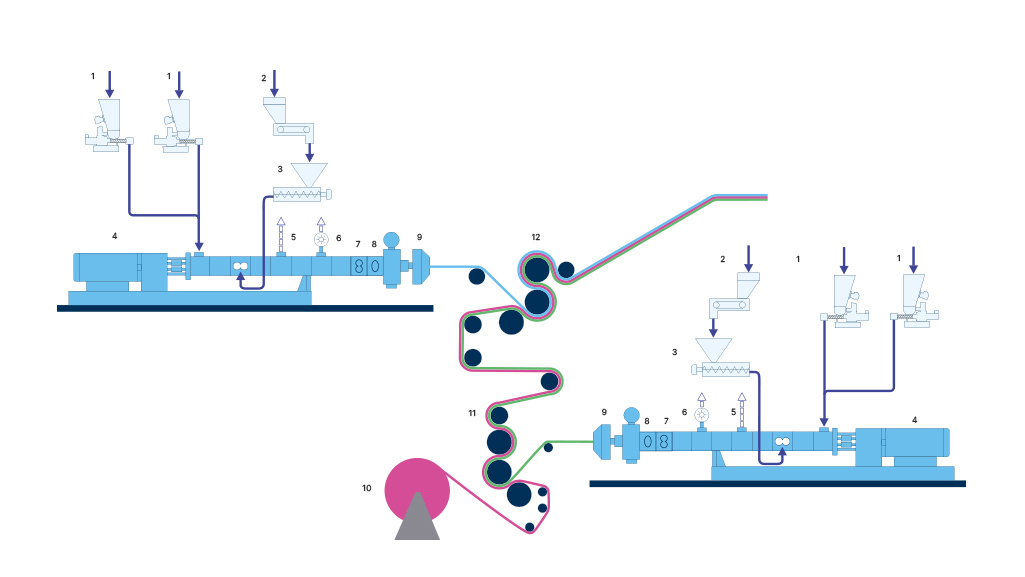
As a one-stop provider of complete systems, Coperion integrates all process steps into a high-performance integrated system. We design raw material supply, bulk material handling, conveying, feeding, and extrusion using our own technologies. For the process steps downstream of extrusion, we collaborate with trusted partners. We handle the entire project for you: from plant engineering through to plant commissioning.
The result is complete systems for roofing membranes with throughput rates of up to 5 t/h, which impress with consistent product thicknesses, stable high quality, and high production efficiency.
What are the requirements for roofing membranes?

Roofing membranes must be strong, flexible, and durable. This requires state-of-the-art production technologies.

Maximum reliability & quality: Roofing membranes require high resistance to breakage, and impact, as well as extreme weather and aging resistance. This is achieved through a composition of various plastic layers and polyester fabric.

Enhanced fire protection: Roofing membranes must meet strict fire safety standards. This is achieved by adding flame retardants to the plastics.

Technical Specifications of Roofing Membranes

Suitable materials include: PVC and TPO
Product width: 1,500 mm to 4,000 mm
Product thickness: 1 mm to 3 mm
Product structure: Multilayer films with integrated reinforcement made of nonwoven fabric or woven fabric, some of which are additionally laminated
Extruder: ZSK twin screw extruder
Production capacity: 500 kg/h to 5,000 kg/h
Possible products:
  • Films and membranes, manufactured via inline compounding and direct extrusion
  • Pellets as intermediate product, manufactured via compounding

Multilayer Films

Structure of Roofing Membranes

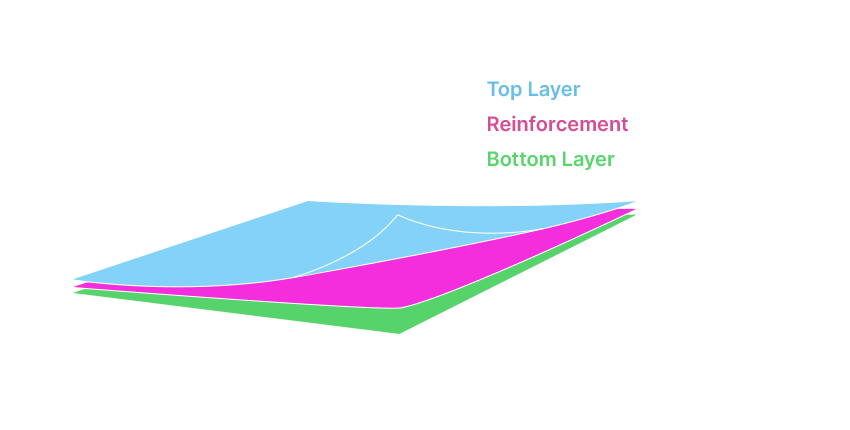
Roofing Membranes are multilayer films with integrated reinforcement.

Roofing membranes are made up of multiple polymer-based layers and combined with nonwoven or woven fabrics. Commonly used plastics for roofing membranes are PVC and TPO.

Our Scope of Services

Turnkey Solution for the Production of Roofing Membranes

With Coperion turnkey solutions, you benefit from the unique synergy between our competencies in Compounding & Extrusion and Materials Handling. From planning and engineering through implementation to commissioning, you receive everything from a single source - with just one point of contact for the entire project.

We coordinate all interfaces across every process step and technology, ensuring seamless integration. The result: a perfectly coordinated complete plant – with one central plant control –for maximum efficiency and performance.

Scope of Services

Plant Engineering

We handle the entire plant engineering process for you – from the initial concept to the implementation of the complete plant for the production of roofing membranes. We combine in-depth process expertise with state-of-the-art plant technology to deliver efficient, reliable, and cost-effective production solutions. Our customized process engineering is precisely tailored to our customers’ individual requirements and ensures the highest quality and maximum performance.

More

Material Handling

From raw material feeding, through unloading stations, intermediate storage, and conveying, to premixing, discharge, screening, drying, and cooling – we possess comprehensive expertise in handling a wide variety of bulk materials. Key components, such as the MIX-A-LOT mechanical bulk material mixer, are manufactured in-house.

More

Feeding

Using gravimetric Coperion K-Tron feeders, we ensure the high-accuracy addition of all raw materials and additives in pellet or powder form into the extrusion lines. The addition of additives such as flame retardants into the ZSK extruder is also highly accurate and reproducible at all times.

More

Extrusion

In the ZSK twin screw extruder, the sometimes highly sensitive components of roofing membranes are plastified, mixed, and homogenized very gently. Additives are fed downstream into the process section of the extrusion line. ZSK extruders are characterized by their exceptionally high performance. They achieve high throughput rates while ensuring gentle product processing. With absolute reliability, they achieve the high product quality required for the plastic layers of roofing membranes.

More

Forming: calendering process, flat film extrusion, reinforcement, coating, lamination, cooling, calibration, surface treatment, cutting and winding technology

For its complete roofing membrane production lines, Coperion implements all post-extrusion process steps in close collaboration with proven partners. This includes, among other things, flat film extrusion via sheet extrusion dies or the calendering process, the insertion of backing materials, the bonding of layers, surface treatment, and the cutting and winding of the finished roofing membranes. Through close cooperation, we create optimally coordinated, high-performance turnkey solutions from a single source tailored to each customer’s specific product requirements. 

Service

Our service doesn’t end with the installation of the entire system. We continue to support you and your production process afterward – always with the goal of fully maximizing the performance of our roof membrane systems. Our global team of service technicians is available to assist you with any questions regarding after-sales services, maintenance, and modernization projects.

More

Facts about Roofing Membranes

What is the difference between TPO and FPO?


TPO and FPO refer to the same material: roofing membranes made of thermoplastic polymers.

The difference lies in terminology:

TPO (Thermoplastic Polyolefin) is the internationally accepted term and emphasizes the material’s thermoplastic properties.

FPO (Flexible Polyolefin) is used primarily in German-speaking countries and highlights the flexibility of the membranes.

Subscribe to the Coperion Newsletter